Actors...

Musicians...

Spies/Detectives/Sleuths...

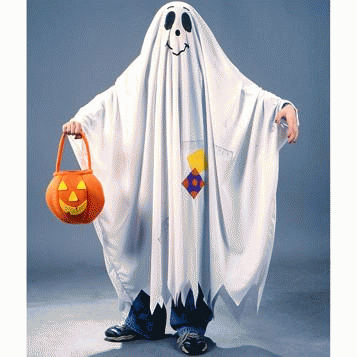
on Halloween...
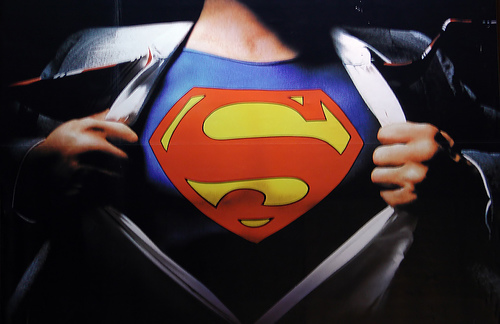
Superheroes...
Students will work in groups of 2 or 3 to design a fictional world based on pitches from students.The final designs may include fashion, architecture, consumer goods, art, etc., but are intended to create a world in which art and society logically correspond. Students should consider the correlation between politics and aesthetics, between social reality and fictional fantasy.
 |
| Concept art for world design from Wreck it Ralph |
 |
| Graphic design of political advertising from The Dark Knight |
 |
| Graphic design for consumer advertising from Catching Fire |
 |
| Concept art for costume design from Pirates of the Caribbean |
 |
| Graphic design for public signage in District 9 |
Another example of Egyptian material being refracted through a Semitic lens is provided by the story of the rich man and Lazarus, which is recounted in Luke 16:19—31:
There was a certain rich man, which was clothed in purple and fine linen, and fared sumptuously every day: And there was a certain beggar named Lazarus, which was laid at his gate, full of sores, And desiring to be fed with the crumbs which fell from the rich man's table: moreover the dogs came and licked his sores. And it came to pass, that the beggar died, and was carried by the angels into Abraham's bosom: the rich man also died, and was buried; And in hell he lift up his eyes, being in torments, and seeth Abraham afar off, and Lazarus in his bosom. And he cried and said, Father Abraham, have mercy on me, and send Lazarus, that he may dip the tip of his finger in water, and cool my tongue; for I am tormented in this flame. But Abraham said, Son, remember that thou in thy lifetime receivedst thy good things, and likewise Lazarus evil things: but now he is comforted, and thou art tormented. And beside all this, between us and you there is a great gulf fixed: so that they which would pass from hence to you cannot; neither can they pass to us, that would come from thence. Then he said, I pray thee therefore, father, that thou wouldest send him to my father's house: For I have five brethren; that he may testify unto them, lest they also come into this place of torment. Abraham saith unto him, They have Moses and the prophets; let them hear them. And he said, Nay, father Abraham: but if one went unto them from the dead, they will repent. And he said unto him, If they hear not Moses and the prophets, neither will they be persuaded, though one rose from the dead.In his important study of this passage, Hugo Gressmann44 suggested that Luke's account was based on a popular Jewish version, perhaps written in Hebrew, of an Egyptian story. Neither the Egyptian original nor the Jewish version of that original has survived; nevertheless, their existence can be inferred from other documents that do exist. The popular Jewish version can be deduced from seven late rabbinic splinters; these texts almost certainly do not derive directly from the Gospel of Luke. The Egyptian original is hypothesized based on the Demotic story of Setna, described below.45 To analogize the relationship among these texts in genealogical terms, the Egyptian original is like a grandfather, and the popular Jewish version a father, to the account in Luke. The story of Setna is a kind of uncle to the Lucan account, and the seven rabbinic splinters are nieces and nephews of sorts.
The Demotic story of Setna is known from a single papyrus manuscript in the British Museum (Pap. DCIV).46 It was written on the back of two Greek business documents, one of which was dated in the seventh year of Claudius (A.D. 46—47). We can therefore suggest that the Demotic story was written sometime during the next half century, or roughly A.D. 50—100. According to the story, the magicians of Egypt were challenged by an Ethiopian sorcerer, but no Egyptian was able to best the challenger. So an Egyptian in Amnte, the abode of the dead, prayed in the presence of Osiris, the ruler of Amnte, to return to the land of the living. Osiris commanded that he should, and so the man, though dead for centuries, was reincarnated as the miraculous offspring of a childless couple and given the name Si-Osiris ("Son of Osiris"). Eventually, when the boy turned twelve, he dealt with the foreign sorcerer and then vanished from Earth.
The part of the story that is relevant to Luke 16 takes place while the boy is growing up. One day the boy and his father see two funerals: first, that of a rich man, shrouded in fine linen, loudly lamented and abundantly honored; then, that of a poor man, wrapped in a straw mat, unaccompanied and unmourned. The father says that he would rather have the lot of the rich man than that of the pauper. Little Si-Osiris, however, impertinently contradicts his father's wish with an opposite one: "May it be done to you in Amnte as it is done in Amnte to this pauper and not as it is done to this rich man in Amnte!" In order to justify himself, the boy takes his earthly father on a tour of Amnte.
Si-Osiris leads his father through the seven classified halls of Amnte. The dead are assigned to one of the halls depending on the merits and demerits of their mortal lives. In the fifth hall they see a man in torment, the pivot of the door being fixed in his right eye socket, because of which he grievously laments. In the seventh they see Osiris enthroned, the ruler of Amnte, and near him a man clothed in fine linen and evidently of very high rank. Si-Osiris identifies the finely clad man as the miserably buried pauper and the tormented one as the sumptuously buried rich man. The reason for this disparate treatment is that, at the judgment, the good deeds of the pauper outweighed the bad, but with the rich man the opposite was true. Now the father is able to understand the filial wish of Si-Osiris.
Once again we are able to see how the Egyptian story has been transformed in Semitic dress. The angels of the Lucan account appear to be an instrumentality substituted for Horus (or the falcon of Horus).47 The "bosom of Abraham" represents Amnte, the Egyptian abode of the dead. And, most remarkably, Abraham is a Jewish substitute for the pagan god Osiris—just as is the case in Facsimiles 1 and 3. These relationships are summarized in a chart following the article.
Each student will choose an existing, mediated representation of the culture, race, ethnicity, gender, nationality, religion, etc. with which he/she identifies. The representation may be in any medium—film, photograph, visual art, poetry, literature, advertisement, news article, song, music video, etc.—but it should be older than the student. Students will remix the representation so that their new creation demonstrates their negotiation of this aspect of their identity and how it has been historically represented in media. Students should consider the correlations and contradictions between his/her ‘self ’ (perspectives, practices, etc.) and this historical representation of this aspect of his/her identity.


"The usual difficulty with the observer of modern art is that he does not inquire patiently and sincerely concerning the 'meaning' of a work of art which strikes him as grotesque, distorted or eccentric (in another word, unintelligible), but, by a sort of symbolic thought-process, recognizes its unrecognizability and thus thwarts any possible further intelligent interest or ultimate enjoyment. It is as if, in a crowd, seeking someone we knew and, looking into each strange face, we should recognize its unrecognizability and pass it by as irrelevant to our quest. This would be a perfectly natural procedure under the circumstances; but in art we are not looking for something we already know; we are looking for a new experience whose value and quality are unknown to us. In such a case to permit unrecognizability to be a barrier is to condemn ourselves to a life of monotony, without the thrills of discovery, insight and 'conversion.'"
Each student will choose an artistic medium (film, photography, drawing, painting, medium, dance, performance, graphic design, poetry, literary nar- rative, etc.) and produce a work which explores the specific elements unique to that medium--like Brakhage or Daren’s films, Pollock’s paintings, Warhol’s prints, Cage’s music, etc. Students should consider how their particular work functions as a celebration, commentary or critique of their chosen medium.
